- Kadar Vanilin
- 1.5 – 1.0%
- Panjang
- 16 – 13 cm
- Aroma
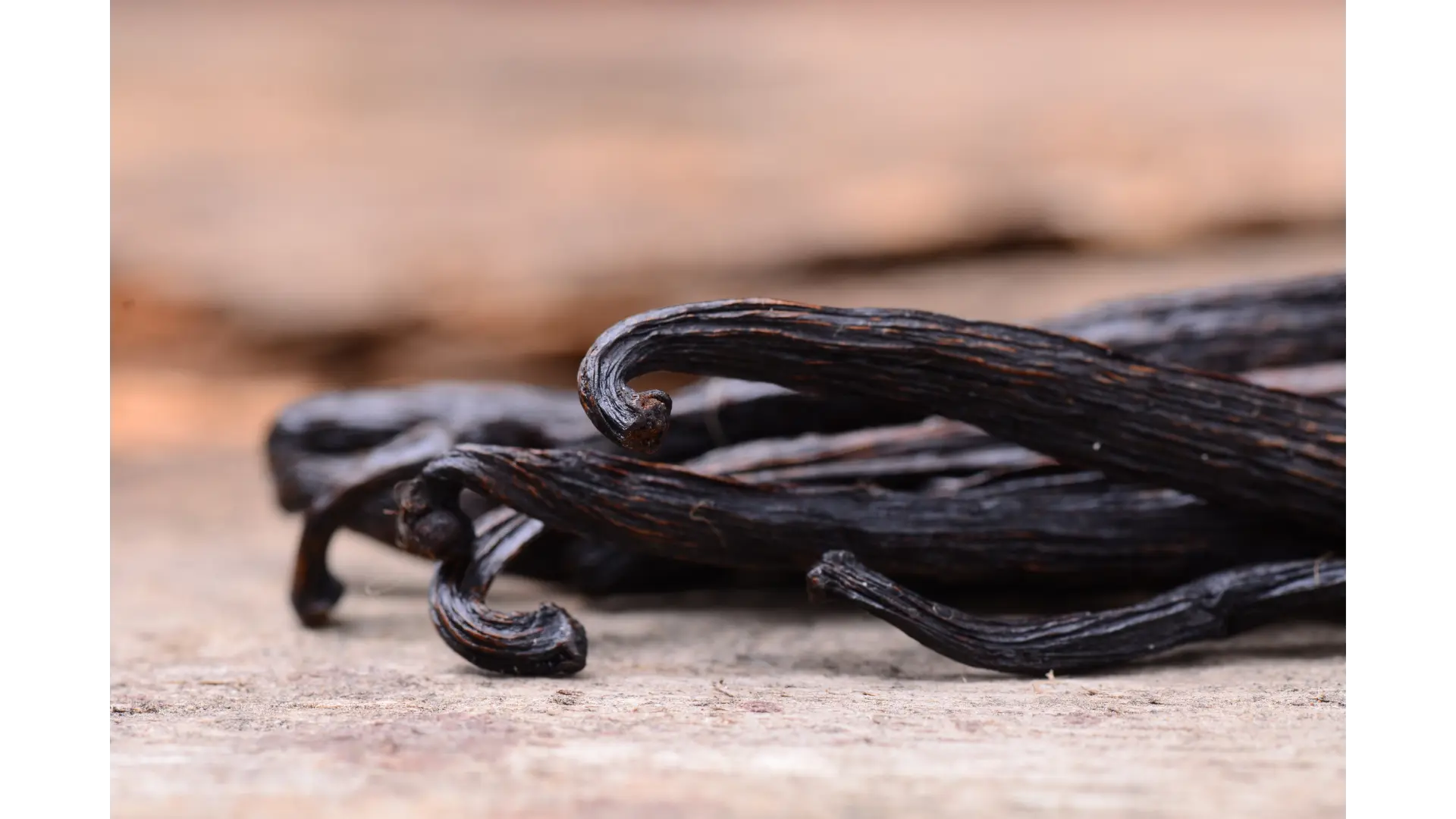
- Bunga, buah, halus, kompleks
- Tekstur
- Berminyak, kenyal, sedikit padat
Matriks grade
Kadar air menentukan harga per kilo sekaligus daya simpan: makin tinggi kadar air, makin kuat aromanya, tetapi makin sedikit biji per kilo dan makin pendek umur simpan tanpa pendinginan. Panjang dan berat per biji menentukan kualitas tampilan. Untuk ekstraksi, belilah berdasarkan kadar vanillin dan harga, bukan tampilan.
Penggunaan terbaik
- Pastry Prancis dan dessert buah
- Parfum dan aromaterapi mewah
- Minuman spesialis dan krim puding
Kualitas dan kondisi
- 100% pure and natural
- No additives, preservatives or artificial flavourings
- GMO-free
- Gluten-free
- Allergen-free
- Food-grade
Pertanyaan umum
- Why is Tahitensis vanillin lower than Planifolia?
- Tahitensis carries 1.0–1.5% vanillin against 2–4.3% for Planifolia, but that understates it. Its value is aromatic complexity. Heliotropin and other compounds give floral and fruity notes Planifolia does not have. Buyers choose it for aroma, not vanillin strength.
- Should I choose Tahitensis or Planifolia?
- Choose Planifolia for extract, ice cream and chocolate, where you want classic warm vanilla and high vanillin. Choose Tahitensis for pastry, perfumery and applications where the vanilla is tasted directly and its floral character can be perceived.
- Where is your Tahitensis grown?
- Our Tahitensis comes from Papua, Indonesia. It is cured at our facility in Magelang, Central Java, using the same five-stage post-harvest process as our Planifolia.
- Is Tahitensis suitable for extraction?
- It can be extracted, and Grade B and C are priced for it, but most buyers find Planifolia more cost-effective for extract because of its higher vanillin. Tahitensis extract is usually chosen deliberately for its floral profile.

 HS 0905.10.00