- Vanillin content
- 1.0 – 1.5%
- Length
- 13 – 16 cm
- Aroma
- Floral, fruity, smooth, complex
- Texture
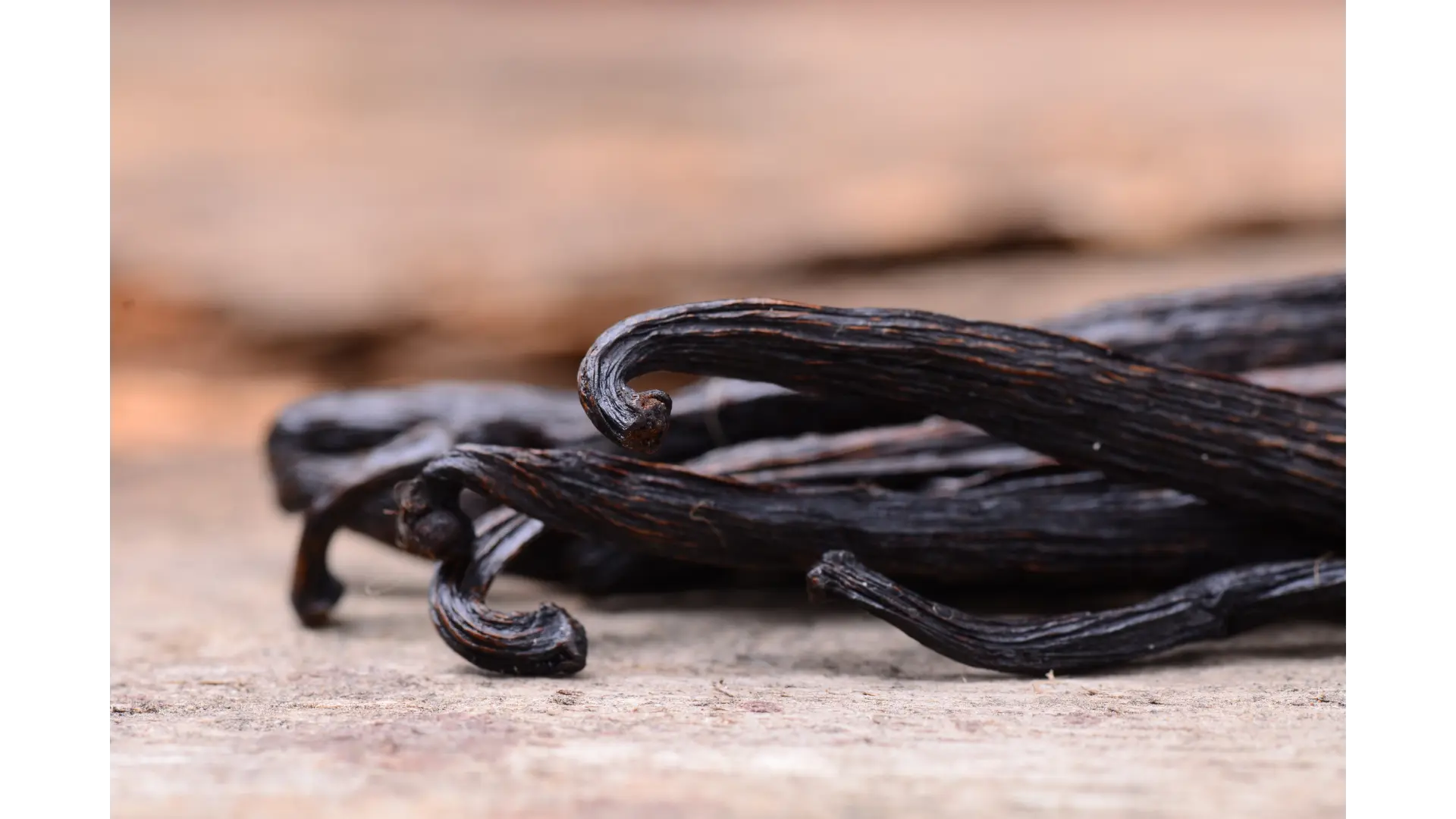
- Soft, flexible, slightly moist
Grade matrix
Moisture drives both price per kilo and shelf behaviour: higher moisture means more aroma but fewer beans per kilo and a shorter unrefrigerated life. Length and weight per bean determine presentation quality. For extraction, buy on vanillin and price, not appearance.
Best uses
- Perfumery and fragrance
- Gourmet desserts
- Premium pastry
- Aromatic infusions
Quality and condition
- 100% pure and natural
- No additives, preservatives or artificial flavourings
- GMO-free
- Gluten-free
- Allergen-free
- Food-grade
Common questions
- Why is Tahitensis vanillin lower than Planifolia?
- Tahitensis carries 1.0–1.5% vanillin against 2–4.3% for Planifolia, but that understates it. Its value is aromatic complexity. Heliotropin and other compounds give floral and fruity notes Planifolia does not have. Buyers choose it for aroma, not vanillin strength.
- Should I choose Tahitensis or Planifolia?
- Choose Planifolia for extract, ice cream and chocolate, where you want classic warm vanilla and high vanillin. Choose Tahitensis for pastry, perfumery and applications where the vanilla is tasted directly and its floral character can be perceived.
- Where is your Tahitensis grown?
- Our Tahitensis comes from Papua, Indonesia. It is cured at our facility in Magelang, Central Java, using the same five-stage post-harvest process as our Planifolia.
- Is Tahitensis suitable for extraction?
- It can be extracted, and Grade B and C are priced for it, but most buyers find Planifolia more cost-effective for extract because of its higher vanillin. Tahitensis extract is usually chosen deliberately for its floral profile.

 HS 0905.10.00