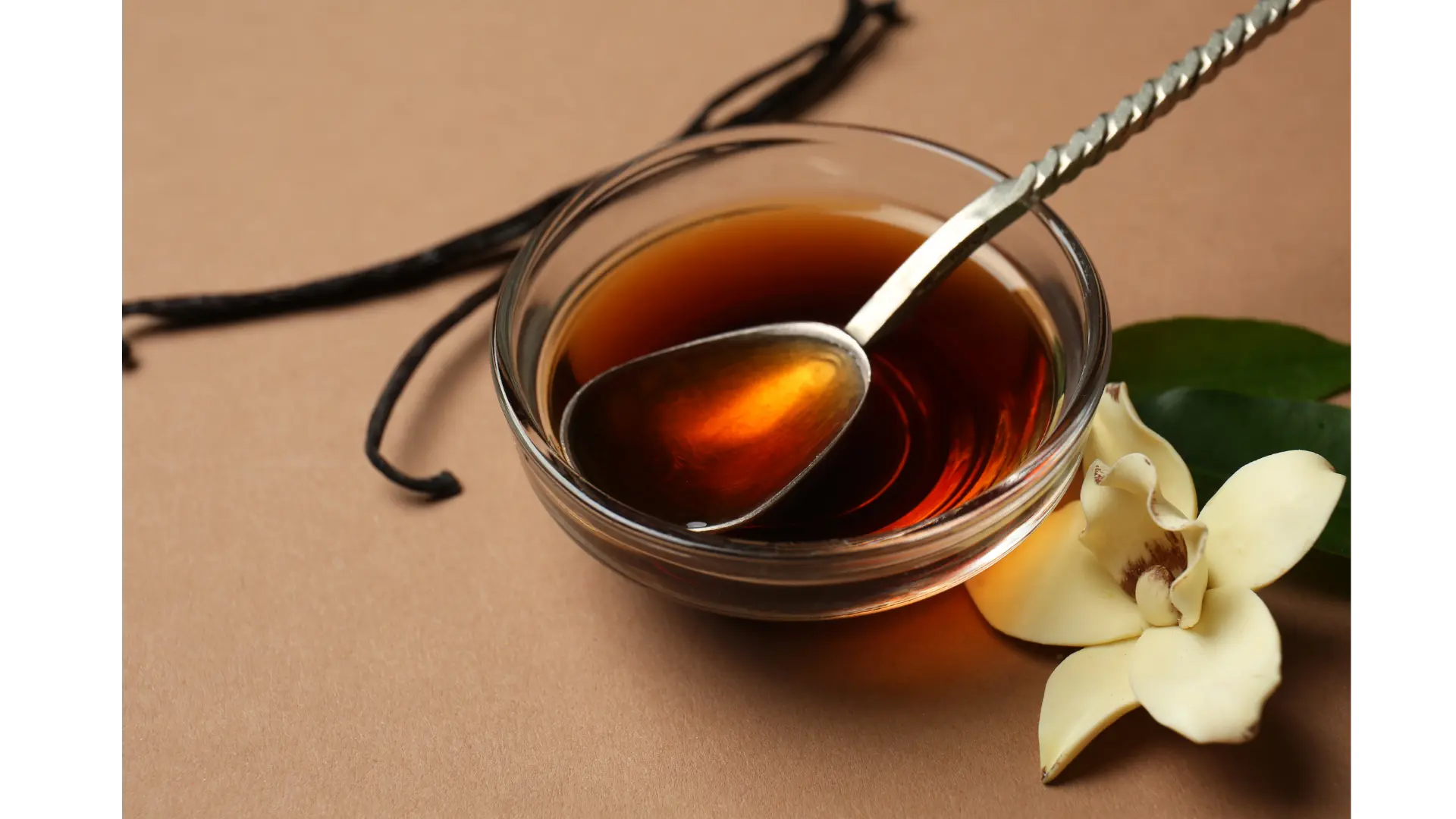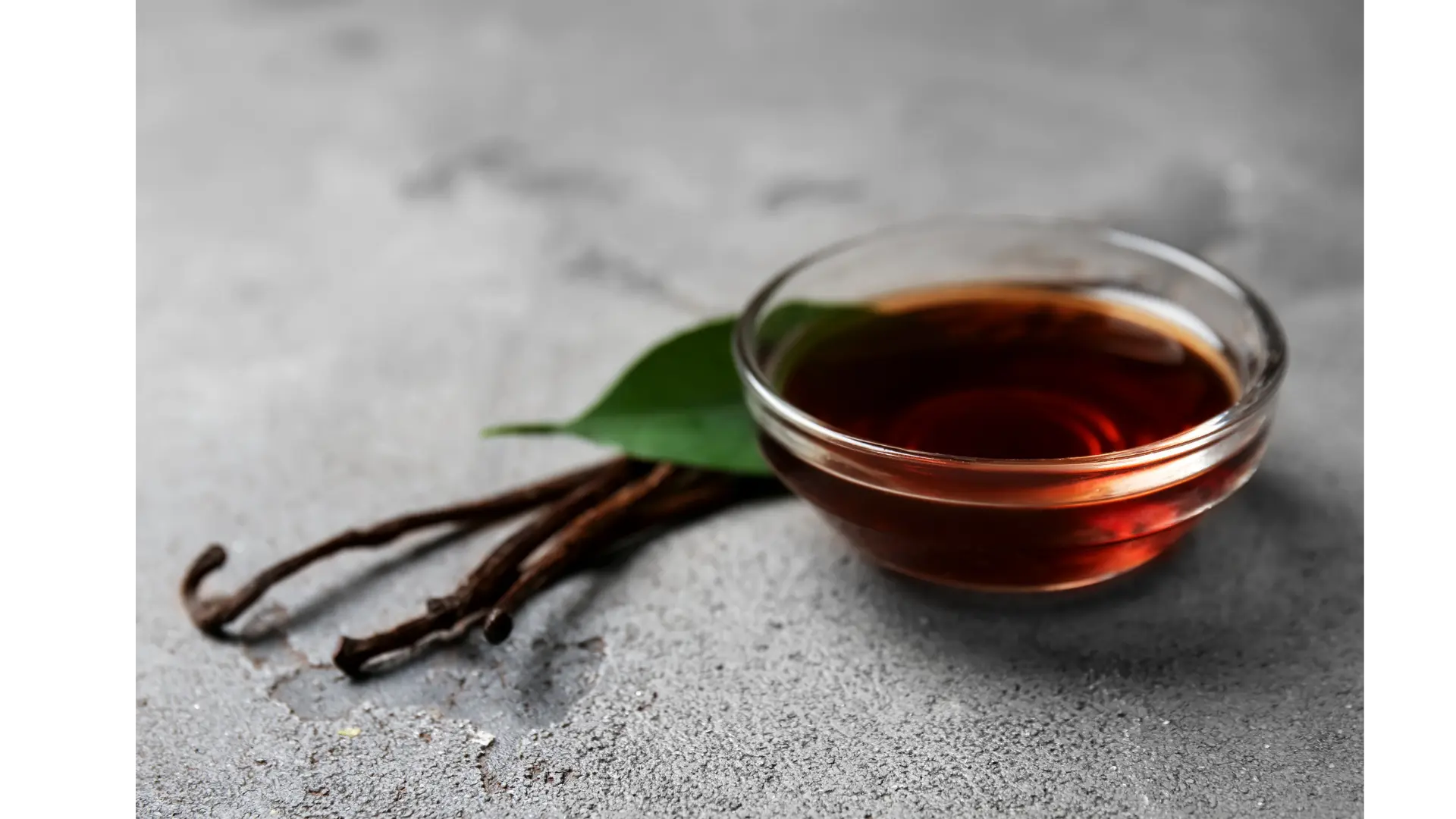
Most vanilla grading systems are built around appearance: length, moisture, whether the pod is split or whole. That makes sense for a pastry chef plating a scraped pod, and almost no sense for a producer about to macerate every bean in ethanol or water. Once the pod is in the extraction vessel, nobody sees it again. Buying on appearance for extraction usually means paying a premium for something you are about to throw away.
What actually matters for extraction
Two numbers drive extract quality: vanillin content and moisture. Vanillin is the compound responsible for the core vanilla flavour, and it correlates with how fully the bean matured before harvest, not with how long or pretty it is. Moisture affects yield indirectly: a very wet bean has proportionally less dry matter, so you extract from less actual vanilla per kilogram purchased.
Our Vanilla Planifolia carries 2 to 4.3% vanillin depending on grade, with Gourmet Super Premium at the top of that range because it is picked at 8 to 9 months for maximum maturity. Grade B and Grade C carry lower moisture, 15 to 20% and natural/low respectively, with correspondingly lower prices, because the visual defects that drop them out of Gourmet and Grade A, splits, minor breakage, uneven colour, have no bearing on what comes out of the extraction vessel.
Grade B or Grade C: which one
- Grade C is broken, dry, and priced for bulk extract runs. It is the most cost-effective option per unit of extractable vanillin, but its lower moisture means a milder starting aroma.
- Grade B holds 15 to 20% moisture and a mild aroma while still costing meaningfully less than Gourmet or Grade A. It is the middle ground for producers who want a cleaner starting material without paying for appearance they will never use.
- Neither grade is "lower quality" vanilla in the sense that matters for extraction. They are lower grade by a visual standard that was never designed with your process in mind.
Planifolia or Tahitensis for extraction
Vanilla Planifolia is the default choice for extraction: higher vanillin (2 to 4.3% against 1.0 to 1.5% for Tahitensis) means more extractable flavour compound per kilogram of bean. Vanilla Tahitensis carries a floral, fruity character from compounds like heliotropin that Planifolia does not have, and some producers deliberately extract it for that reason, but it is a choice for a specific flavour profile, not a cost-effective default.
If you already know your target application, the fastest way to shortlist a grade is to check moisture, length and weight per bean against the published table, then ask for a quote on the grade that fits your process rather than the grade that photographs well.