Ask any two vanilla suppliers what determines price, and moisture content comes up before length, colour, or even vanillin. It is the number our grade table leads with, and it is worth understanding what it actually measures.
What moisture content measures
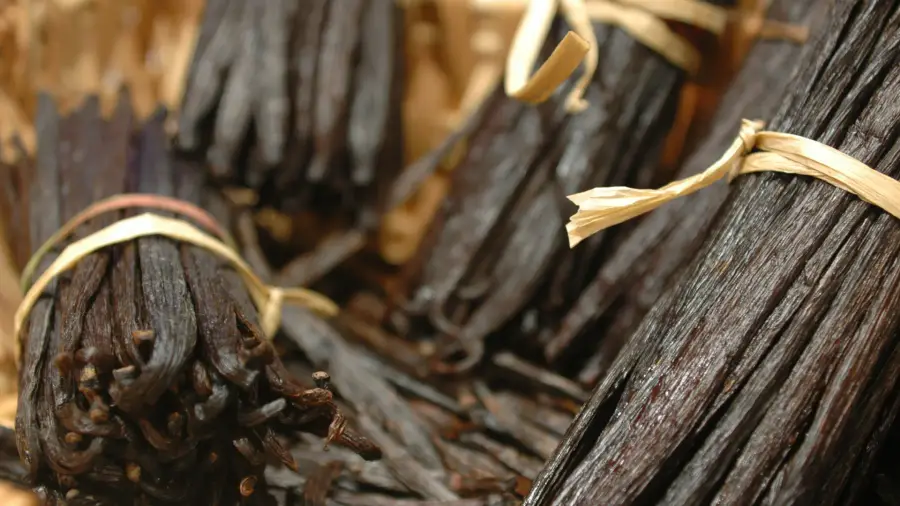
Vanilla beans are cured, not simply dried, moisture is deliberately retained through a five-stage process, harvesting, curing, drying, conditioning, grading, rather than removed entirely. A bean at 30 to 38% moisture, our Gourmet Super Premium range, is plump, flexible and aromatic. A bean at 15 to 20%, our Grade B range, is firmer and drier, with a milder aroma.
Three things moisture tells you
- Aroma intensity: higher moisture generally correlates with more perceptible aroma, since more of the volatile compounds remain in the pod.
- Bean count per kilogram: a wetter bean is heavier for its size, so a kilo of Gourmet contains fewer individual beans than a kilo of Grade C.
- Storage life: higher-moisture beans need more careful handling and a shorter window before use; lower-moisture beans keep longer with less attention.
Why this matters more for some buyers than others
If beans will be seen, plated, or scraped in front of a customer, higher moisture and the resulting plumpness and flexibility genuinely matter. If beans are going straight into an extraction vessel, moisture matters only for yield economics, you are paying for water weight, not flavour, in a wet bean, so a lower-moisture grade is frequently the more rational purchase.
Before ordering, decide which category your use case falls into. Buyers who default to the highest-moisture grade regardless of application are often paying a premium for a quality that their process will never register.